
By clicking “Accept All Cookies”, you agree to the storing of cookies on your device to enhance site navigation, analyze site usage, and assist in our marketing efforts. View our Privacy Policy for more information.
“Diego had never seen the sea. His father took him to discover it. . . . And so immense was the sea and its sparkle that the child was struck dumb by the beauty of it. And when he finally managed to speak, trembling, stuttering, he asked his father: “Help me to see!””— Eduardo Galeano, The Function of Art I


What is the role of art in our work?
Most of our world is one built around domination: from our hierarchical institutions, to our planning, our funding, our programmes, our relationships, our language, our perspectives, even our knowledge.
In the process, most of the tools we use to seek a more just world have become static. Our human rights treaties, for example, have become far removed from lived and emotional experiences.
Yet, at their core, they should be alive and dynamic. They should be able to shift and change, adapt, be refined or expanded. They should help simplify and clarify while simultaneously embracing the messiness, uncertainty and complexity of our world.
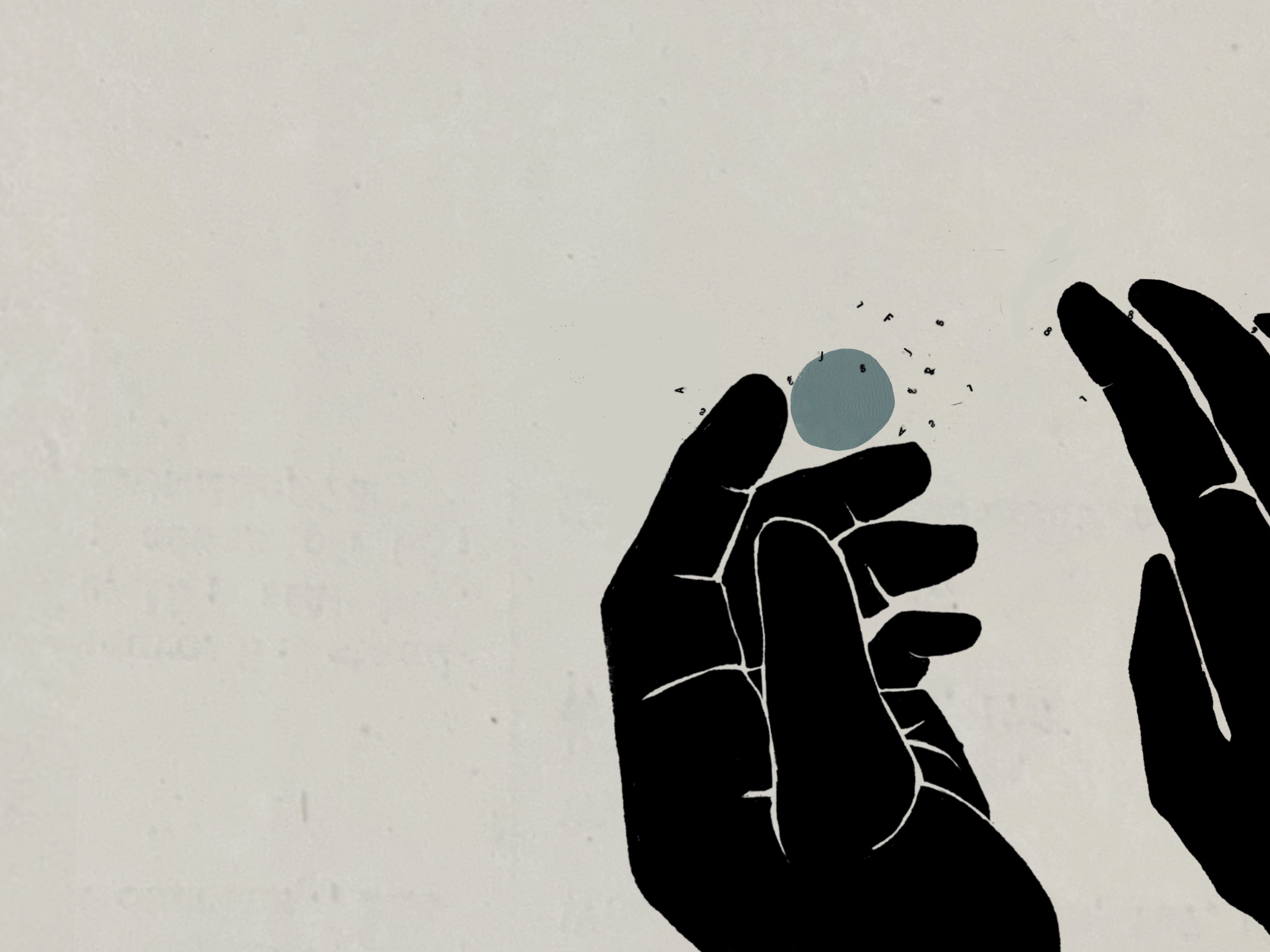
This is where art has a function: it can be used to recover what has been lost or what can no longer be seen or felt. It can also make the invisible visible, as artist Olafur Eliasson says in a conversation about art and activism with activist Kumi Naidoo.
Our decision to work with ‘art’ was therefore not out of the desire to decorate static information, nor to simply hire more artists to better communicate our work. While those might well be valid (yes to more creativity to our sector!) it risks being merely a cosmetic exercise.
So what do we understand by art? We are not either speaking about art in terms of an object, a currency, luxury, something we hang on walls that either represents a cause we might support or that was created by a victim of that cause. We understand art as a language.
This allows us to sense things that escape classification, or what we might understand as knowledge. It helps us move away from hierarchy and numerical information.
This is necessary so that we can be challenged out of our siloed ways of thinking and working, and by extension our understanding of how change occurs.
While society must accept some things as real, James Baldwin wrote, “the artist must always know that the visible reality hides a deeper one, and that all our action and our achievement rests on things unseen. A society must assume that it is stable, but the artist must know, and he must let us know, that there is nothing stable under heaven."
Art has its roots in life and therefore invites all our senses to engage, it opens the door to cooperation, to non-conformity, it activates our imagination. And imagination is the premise for critical thinking; it has the power to create and connect threads previously not seen. It invokes other ways of understanding the world beyond established norms and conformity; it is where we begin to make the impossible possible.
This kind of thinking is urgently needed in our world today, whatever our work might be - we must reimagine, re-interpret and question deeply. “This is precisely when artists go to work,” Toni Morrison said. “There is no time for despair, no place for self-pity. No need for silence, no room for fear. We speak, we write, we do language. This is how civilizations heal.”
This is where we can understand art as a bridge: one which invites different disciplines to dialogue, one where we seek a common language, embracing all different skills of humanity, from different approaches, and available to everyone.
But none of this is new, of course. Art has always been around and we have all, at some point in time, had experience with it. Morrison says “the impulse to do and revere art is an ancient need - whether on cave walls, one’s own body, a cathedral or a religious rite, we hunger for a way to articulate who we are and what we mean.”
We can understand art as a process of bringing something into the world that was not there before, it can be an artifact but it can also be an idea. That process, Professor Elaine Scarry calls a fragment of world alteration, and so if we can alter the world in fragments, she says, “just think what can be imagined together, what might be possible in community: a total reinvention of the world.”
Words, Veronica Yates and illustration Miriam Sugranyes
References
The Book of Embraces, Eduardo Galeano.
Kumi Naidoo in conversation with Olafur Eliasson https://vimeo.com/642793738
‘The Habit of Art,’ in The Source of Self-Regard, Toni Morrison
‘James Baldwin on the Creative Process and the Artist’s Responsibility to Society,’ The Marginalian, by Maria Popova.
Elaine Scarry, quoted in Draw Your Weapons, by Sarah Sentilles
Further resources
Sensuous Knowledge, Minna Salami
Our Stories, Our Faces, Our Voices; Who Tells Our Story? Reconstructing Children’s Rights Institute, Conversation #4 with Rights Studio Miriam Sugranyes
Stefan Zweig: Farewell to Europe, Director Maria Schrader
The Wave in the Mind, Talks and Essays on the Writer, the Reader and the Imagination, Ursula le Guin.
The Shape of Content, Ben Shahn
Philosophical Sketches, Susanne K. Langer
The work of art in the age of mechanical reproduction, Walter Benjamin
Critical hermeneutics, Habermas, Critical hermeneutics
The Culture Industry, Adorno
Eichmann in Jerusalem, A Report on the Banality of Evil, 1963, Hannah Arendt, available online.

“Every single empire in its official discourse has said that it is not like all the others, that its circumstances are special, that it has a mission to enlighten, civilise, bring order and democracy, and that it uses force only as a last resort. And, sadder still, there always is a chorus of willing intellectuals to say calming words about benign or altruistic empires, as if one shouldn't trust the evidence of one's eyes watching the destruction and the misery and death brought by the latest mission civilisatrice.” ― Edward W. Said

"We have art in order not to die from the truth." — Friedrich Nietzsche
"Politics in dark times such as those in which we live, cannot proceed without a counter imaginary: a passionate vision that rivals and defeats the moralized sadism of fascist passions and their phantasmatic landscape." — Judith Butler


