
By clicking “Accept All Cookies”, you agree to the storing of cookies on your device to enhance site navigation, analyze site usage, and assist in our marketing efforts. View our Privacy Policy for more information.
“[W]e are expected and encouraged to become info-maniacs, but never intellectuals. Consumers, not creatives. Everything is short-term. Click bait. Rage bait. We live in a zeitgeist of too much information, but little knowledge and even less wisdom.” — Elif Shafak


In our first post of the year we asked what might be the story of our times.
Is it militarism, fascism? Is it collapse? Is it the great unravelling? Is it the end of something, or the beginning of something?
Every day brings us new revelations of the most obscene horrors humans can inflict on each other, from child sexual abuse to genocide. Perpetrators and their protectors face no consequences. And anyone who protests is viciously attacked. But that is not the story of our times; that is power being unleashed to undo all our senses, because most of us do not have the mental or emotional capacities to withstand so much horror, day in, day out.
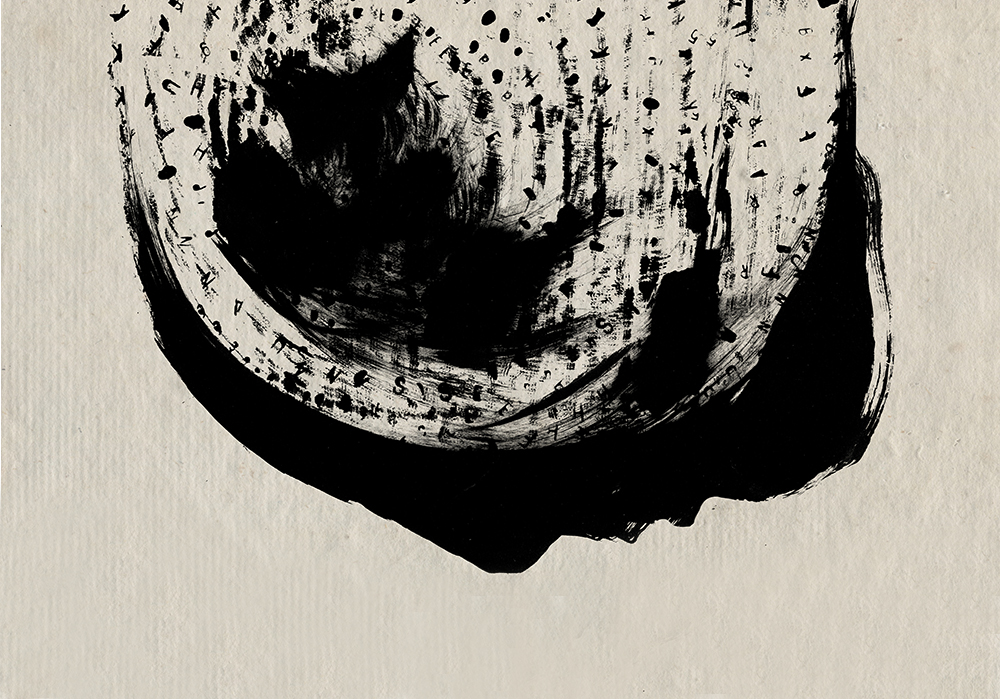
Unfortunately, we do not have a narrative to counter this assault on our senses. In Crisis of Narration, Byung Chul Han says that most of what we are offered today is not a narrative, but information. Information is not narration. Information is not a bearer of sense; whereas narration carries sense, and the meaning of sense, he says, is direction. “Today we are perfectly informed, but we lack orientation.”
Why does this matter? A crisis of narration is also a human crisis. Without a narrative we are more easily manipulated, we are more likely to disengage from the world, and we lose our connection to history, to our ancestors, and to the future. If our life is just a stream of moments, like news cycles, our life becomes just problem solving, Han explains, and someone who merely solves problems does not have a future. It is only with narrative that a future opens up.
A narrative is an expression of the mood of a time, Han says, versus what we have today which are more like micro-narratives of the present moments which cause constant stimulation. This is harmful because if we are constantly stimulated we can no longer enter into contemplation, into reflection; we are perpetually reacting. This is exhausting and disconnects us from ourselves and from each other.
When we lack narrative, people are more likely to believe in conspiracy theories because they fill a gap; when people struggle to make sense of the world, conspiracy theories fulfill a therapeutic function, Han warns.
And those in or seeking power, the fascists, the warmongers, the predatory class, they are growing their base and gaining followers on theirs.
While storytelling is fashionable, most of the storytelling we see today is not providing us with a narrative, it is mostly for marketing purposes, for performance, it’s playing to the gallery. We have gone from storytelling, Han writes, to storyselling.
Stories create social cohesion, they create community, they unite us. They offer meaning and transmit values. Think about stories told around a fire, or how our ancestors used to transmit stories orally. Walter Benjamin pointed to the role of children’s stories which are usually about overcoming a crisis. Stories carried wisdom.
The narratives on which the neoliberal regime is based, however, prevent the formation of community, it turns individuals into entrepreneurs of the self; “the performance narrative does not produce social cohesion – it does not produce a we,” he says.
This is particularly important in times of great upheaval when there can be a sort of historical amnesia, where we think that what we are facing has never been faced before. This is because we are unable to examine the living memories of our communities, Audre Lorde warned, and so “we find ourselves having to repeat and relearn the same old lessons over and over that our mothers did because we do not pass on what we have learned, or because we are unable to listen.”
If we are all busy telling our own stories, who is listening? “The narrative community is a community of careful listeners” Han says, “and people who listen carefully are oblivious to themselves; they immerse themselves in what they hear.” This is a path to humility, to care, to generosity, to belonging.
In this way, narration is healing. Just like with children’s stories, narratives can help us come to terms with catastrophic events by embedding them in meaningful contexts, he explains.
“By placing our sorrows under the narrative light, it takes away the oppressive facticity. They are absorbed by narrative rhythms and melodies. A story raises them above mere facticity. Instead of solidifying into a mental block, they liquefy in the narrative flow.”
What we need, Han suggests, is narrative courage: the courage to create a world changing narrative. Today’s late modernity storytelling has lost its narrative courage. It is mostly a matter of commercialism and consumption, we have succumbed to convenience or to likes, when everything is short term, we need no narrative. In this there is no longing, no vision, it lacks a future. In this, we are reduced to only witnessing what is momentarily relevant.
Words, Veronica Yates and illustration, Miriam Sugranyes
‘My Country is the Whole World, My People Are Humanity,’ Unmapped Storylands with Elif Shafak, 18 January 2026. Read here.
The Crisis of Narration, Byung Chul Han.
Sister Outsider, Audre Lorde.
‘When Stories Take Us Places,’ by Irene Caselli, for the Rights Studio Magazine #3 Movement, 2022. Read here.
‘The Human Crisis.’ Albert Camus, speech given at Columbia University on 28 March 1946. Read here.
‘You Don’t Own Your Narrative Anymore,’ Naomi Klein and Yanis Varoufakis in conversation, DiEM TV livestreams, 5 February 2026. Listen here.

“You can cut all the flowers but you cannot keep spring from coming.” — Pablo Neruda

“I draw from the absurd three consequences, which are my revolt, my freedom, and my passion.” — Albert Camus

“I remain just one thing, and one thing only, and that is a clown. It places me on a far higher plane than any politician.” — Charlie Chaplin

"Only the story can continue beyond the war and the warrior … It is the story, not the others, that saves our progeny from blundering like blind beggars into the spikes of the cactus fence. The story is our escort; without it, we are blind."– Chinua Achebe, Anthills of the Savannah

“Those who say it can't be done are usually interrupted by others doing it.” ― James Baldwin
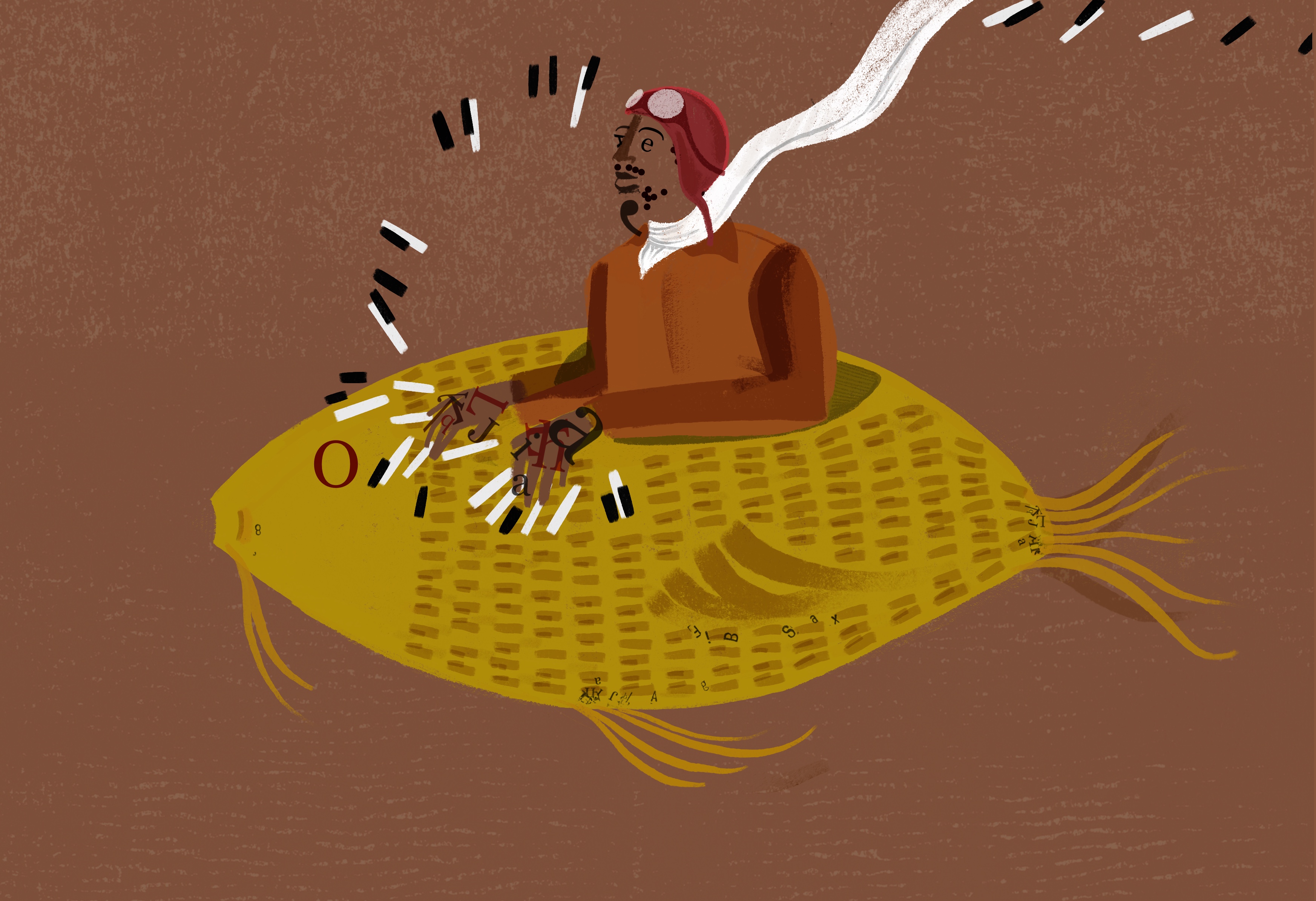
“But if you look at insurgencies around the globe in the last 200 years, there’s not a single one that doesn’t have its poetry. Just show me a movement that doesn’t have its poetry. If you show me one, I will eat my computer.” — Robin D.G. Kelley


