
By clicking “Accept All Cookies”, you agree to the storing of cookies on your device to enhance site navigation, analyze site usage, and assist in our marketing efforts. View our Privacy Policy for more information.
“How many goodly creatures are there here! How beauteous mankind is! O, brave new world That has such people in’t!” — William Shakespeare, The Tempest


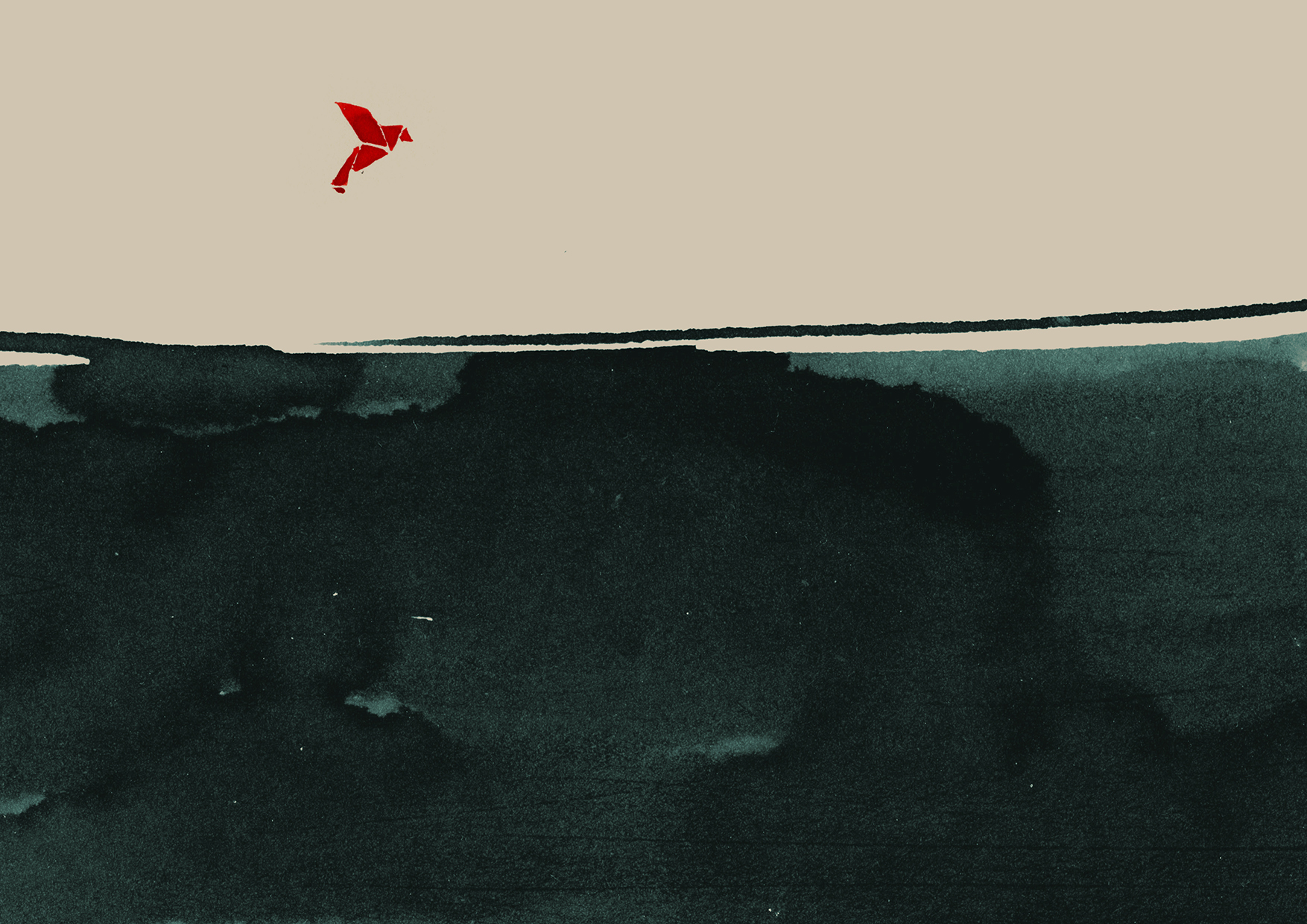
We are walking among monsters. Monsters that show no signs of abating. So we must build courage and strength to keep going with dignity and grace, whether we stumble, whether we fall, whether we fail.
This time last year, we offered you our manifesto for sanity, which we described as a small collection of wisdom and advice from those who continue to illuminate these dark times, those who help us to see clearly and give us the courage to never ever give up in our striving for a more just, creative and peaceful world. With our manifesto in tow, we entered the year and set out to explore how we had screen-walked ourselves into this current dystopia.
To end this year, we want to build on that manifesto and highlight some of the lessons we learned, things we discovered, understood, came to terms with, things we let go of, things we must remind ourselves of, and things we commit to, again and again.
This is our way to honour all those brave, creative and unrelenting voices that continue to create beauty among the ruins, who remind us what it means to be human, to be heart, to remain unvanquished.
Be ready for the marvelous. Reason has left the stage. So we must act accordingly. In our upside down world where those facing genocide must be disarmed and the perpetrators armed, acting with reason will get us nowhere. Instead we should think like a surrealist.
Suzanne Césaire believed that surrealism could be a liberatory movement, it was about making a new life and freeing the mind from the shackles of absurd logic and so-called western reason. Surrealism was not an ideology but a state of mind, a “permanent readiness for the marvelous.” Its cause was the cause of freedom, like art and like life. “Surrealism is living, intensely, magnificently, having found and perfected a method of inquiry of immeasurable efficacy,” she wrote.
Read Readiness for the Marvelous and Make Good Ruins
Freedom was fought for. Freedom is not a gift. It is not charity. As Arundhati Roy reminds us, “our freedoms, such as they are, were never given to us by any government; they have been wrested by us. If we do not use them, if we do not test them from time to time, they atrophy. If we do not guard them constantly, they will be taken away from us. If we do not demand more and more, we will be left with less and less.” Fighting for freedom, ours and that of others, is a duty, not a hobby. In these times, there is no such thing as a spectator.
Read Imperial Boomerang and Do No Harm
Peace is not liberation. Peace is a return to the status quo. Peace is ‘be quiet and content with what you have.’ Peace is dressed-up colonialism. It’s preaching humanitarian aid as apolitical. It’s two-sides journalism. It’s charity over liberation. It’s philanthropy, not economic democracy. It’s female war criminals as feminism. It’s bombing in the name of liberation. It’s storytelling to humanise Palestinians and all those people othered by the war economy.
As Kwame Ture said “there’s a difference between peace and liberation, is there not? You can have injustice and have peace. You can have peace and be enslaved, so peace isn’t the answer—liberation is the answer… ‘peace’ is the white man’s word, ‘liberation’ is our word.”
Read The Violence of Bureaucracy and We Are Colour
Empathy is not moral action. In order for people to become the recipient of empathy, they need to submit to a worldview that makes them acceptable victims. Hannah Arendt argued instead for the active concept of ‘understanding’ and of ‘visiting’ the other. This means we should stop trying to make people fit into our worldview or overcome differences, we should accept that there are multiple perspectives, without needing to accept them or be comfortable with them, it’s the discovery of other ways of being. Understanding is about learning to live in a shared world with people who are different. This is the foundation of moral action for Arendt.
Read Kindness and Moral Beauty
Genocide is a Western value. Behind the pretence and the language of human rights, our governments have shown their true values: genocide is only an aberration when committed on its own people. On others, and in the name of economic expansion, some people must be sacrificed; as one abhorrent leader said, it’s Europe’s ‘dirty work.’ Vijay Prashad says that as the economic power of western countries declines, so do their morals. As its global dominance wanes, the west reverts back to seeking dominance through military expansion and the use of force. These times are what Achille Mbembe calls ‘necropolitics.
Read Genocide as Western Value and Imperial Boomerang.
Cruelty is the point, it is not an aberration. Whether it’s the Berlin police beating peaceful protesters, Israeli soldiers posting their war crimes on social media, or ICE agents in the US ripping families apart, it’s not a slip, the point is cruelty. They want us to share it widely to scare people into silence, into hiding, into fear. We need another response. Perhaps, as Bayo Akomolafe suggests (and Bruce Lee before him), we should become water, which "is not to surrender in despair. It is to dissolve into relation. To learn that fixing is not the only mode of response. That maybe, when the world is burning, the most radical thing is not to organise against it, but to disappear differently. To unlearn the house. To soak into the cracks. To become the unnamed thing that fire cannot touch." Let us be water, my friend.
Read Power vs. Life
We are all complicit. We are all entangled in what goes on in the world: as a voter, a tax payer, a consumer, a participant, a worker, a traveller. While the harm we cause may not be intentional, all of us are causing harm, in various ways. We are all, at the very least, implicated through indirect, structural and collective forms of agency that enable exploitation and domination, implications that often remain unseen and cannot be adjudicated in court. What if, instead of always trying to do, do, do, we perhaps considered what it is we should undo, or stop doing?
Read Do No Harm
Learning from history. There are great attempts at erasing history, almost always undertaken by the oppressors. Historian Ussama Makdisi says he is a scholar because he believes there is something called telling the truth, there is something called history, justice. “Yes, the powerful have always oppressed,” he says, “but there is no such thing as a state that remains the same forever. … We’ve seen the history of slavery, we’ve seen the history of apartheid in South Africa, we’ve seen the history of colonialism… these systems eventually break down.” Perhaps human evolution should not be characterised by technological inventions, these increasingly aim to erase the human altogether, but rather with humans reaching a higher consciousness, one in which we are able to learn from history, in its diversity and multiplicity.
Read Afraid of History
There is always an alternative. For Edward Said, the role of the intellectual was to always to assert the alternative, because during crises, alternatives are often pushed aside. The true intellectual was someone who worked to advance human freedom and knowledge and who was not easily co-opted by governments or corporations, but rather always sided with the forgotten, the weak, the unrepresented. Naomi Klein says we need to understand that those currently holding power don’t actually believe in a future, only an apocalyptic one. What we should do, she suggests, is build a broad coalition of people who believe in this realm, this world, and each other.
Read The Role of the Intellectual
We must nurture our words. What is the role of language In a time of genocide? On the one hand, the cruelty and horrors we witness have left us literally lost for words, on the other hand, we have to contend with words being misused, deliberately omitted or even forbidden. When empire sanitises violence and weaponises language, what we are witnessing, Omar El Akkad explains, is language being used for the exact opposite of its purpose, to unmake meaning. But we have poetry. So we must liberate ourselves from language that evades, obscures, imprisons, hides, and instead, use language as a tool to communicate, to understand, to take action, to become wiser. Because what are words for if not to clarify the world?
Read The Prism of Language / Erosion of Discourse / Dedication
Find your aesthetic arrest. Mythographer Martin Shaw warns that many of us are utterly consumed by the seemingly horrific narrative of our times. The problem, he says, is that many of us have no shield to reflect, we have no art to reflect the immensity of what’s in front of us. Referencing Medusa, he warns “if all you do is stare into hell, you will become ashes.” This is why we need art, stories, myths, because their articulation enables beauty to work itself out into the world. Through those, we can be in touch with our senses, Shaw says, we can be woken up, be in what James Joyce called ‘aesthetic arrest,’ where our analytical brain quietens so that our mind and senses are in harmony, suspended in contemplation. This helps us see what truly matters to us.
Read: Breaking Open
Laughter as strategy: “The only intelligent tactical response to life’s horror is to laugh defiantly at it.” Soren Kierkegaard, said. While laughing can be a distraction, a relief, a consolation, it is also a tool, a form of resistance, a weapon against mad leaders and their destructive powers. Anyone who is driven by hate, greed or lust for power is not only ridiculous but most likely miserable. We must stop taking them seriously and use humour as another tool in our resistance toolbox.
Read Punching Up
Act as if we are already free. According to David Graeber, freedom only exists in the moment of revolution, but those moments are not as rare as we think. Revolutionary change, he suggests, is going on constantly and everywhere—and everyone plays a part in it, consciously or not. “Direct action is a form of resistance which, in its structure, is meant to prefigure the genuinely free society one wishes to create. Revolutionary action is not a form of self-sacrifice, a grim dedication to doing whatever it takes to achieve a future world of freedom. It is defiant insistence on acting as if one is already free,” Graeber writes.
Read The Burden of Freedom and Power vs Life
We must re-enchant our world. When everything feels so desperate and monstrous we must seek to inhabit the world poetically. This means not just to revel in consolatory poetry every once in a while, but to feel oneself exist in a space-time where the great poetic currents of the planet circulate.
Like the scarlet jester in the 1965 animated film Chromophobia, where the world has been taken over by the dark legions who try to destroy colour, we must use chromatic trickery to resist getting swallowed by darkness. We must be guided, not just by moral courage, but by creative courage, in order to hold on to our humanity, to seed it, to grow it, to spread it. We must work artfully. We must be light. We must be colour. We must be poetry.
Words, Veronica Yates and illustration, Miriam Sugranyes
Last words
We will be back in January with new offerings. In the meantime, as always, we are so grateful to hear from our readers; so please write to us to share ideas, readings, artwork, or just to say hello. You can find all the references and links to other readings and treasures we found along the way in each separate article (a few of them are below).
May you find strength, courage, love, solidarity, creativity, whatever you need in these times, as Arundhati Roy warns: “change will come. It could be bloody, or it could be beautiful. It depends on us.”
See also: Manifesto / Crazy Clown Time / No Time for Despair
-----------------------------------------
References and useful readings
A Manifesto for Sanity: https://www.rights-studio.org/journal/a-manifesto-for-sanity
Crazy Clown Time - Welcome to 2025. Read here.
Necropolitics, Achille Mbembe.
‘On Becoming Water,’ Bayo Akomolafe, 8 December 2025. Read here.
‘On the Phenomenology of Giant Puppets Broken windows, imaginary jars of urine, and the cosmological role of the police in American culture,’ David Graeber, 2007. Read here.
‘Be Water, My Friend,’ The Rights Studio journal.
Who Do We Choose to Be, Facing Reality, Claiming Leadership, Restoring Sanity, Margaret Wheatley.
__________________________________________

“Diego had never seen the sea. His father took him to discover it. . . . And so immense was the sea and its sparkle that the child was struck dumb by the beauty of it. And when he finally managed to speak, trembling, stuttering, he asked his father: “Help me to see!””— Eduardo Galeano, The Function of Art I

“The limits of my language means the limits of my world.”― Ludwig Wittgenstein

“Without the person of outspoken opinion, however, without the critic, without the visionary, without the nonconformist, any society of whatever degree of perfection must fall into decay. Its habits (let us say virtues) will inevitably become entrenched, tyrannical; its controls will become inaccessible to the ordinary citizen.” — Ben Shahn

“Those who say it can't be done are usually interrupted by others doing it.” ― James Baldwin
“Out beyond ideas of wrongdoing and rightdoing, there is a field. I’ll meet you there.” — Rumi

“Vocabulary is not genocidal. Annihilation is.” — Mohammed El Kurd


