
By clicking “Accept All Cookies”, you agree to the storing of cookies on your device to enhance site navigation, analyze site usage, and assist in our marketing efforts. View our Privacy Policy for more information.
“The hour is late. But the victory of tyranny over justice is not inevitable. This is our 1930s moment. Read history. Find courage. Resist this.” — Craig Mokhiber


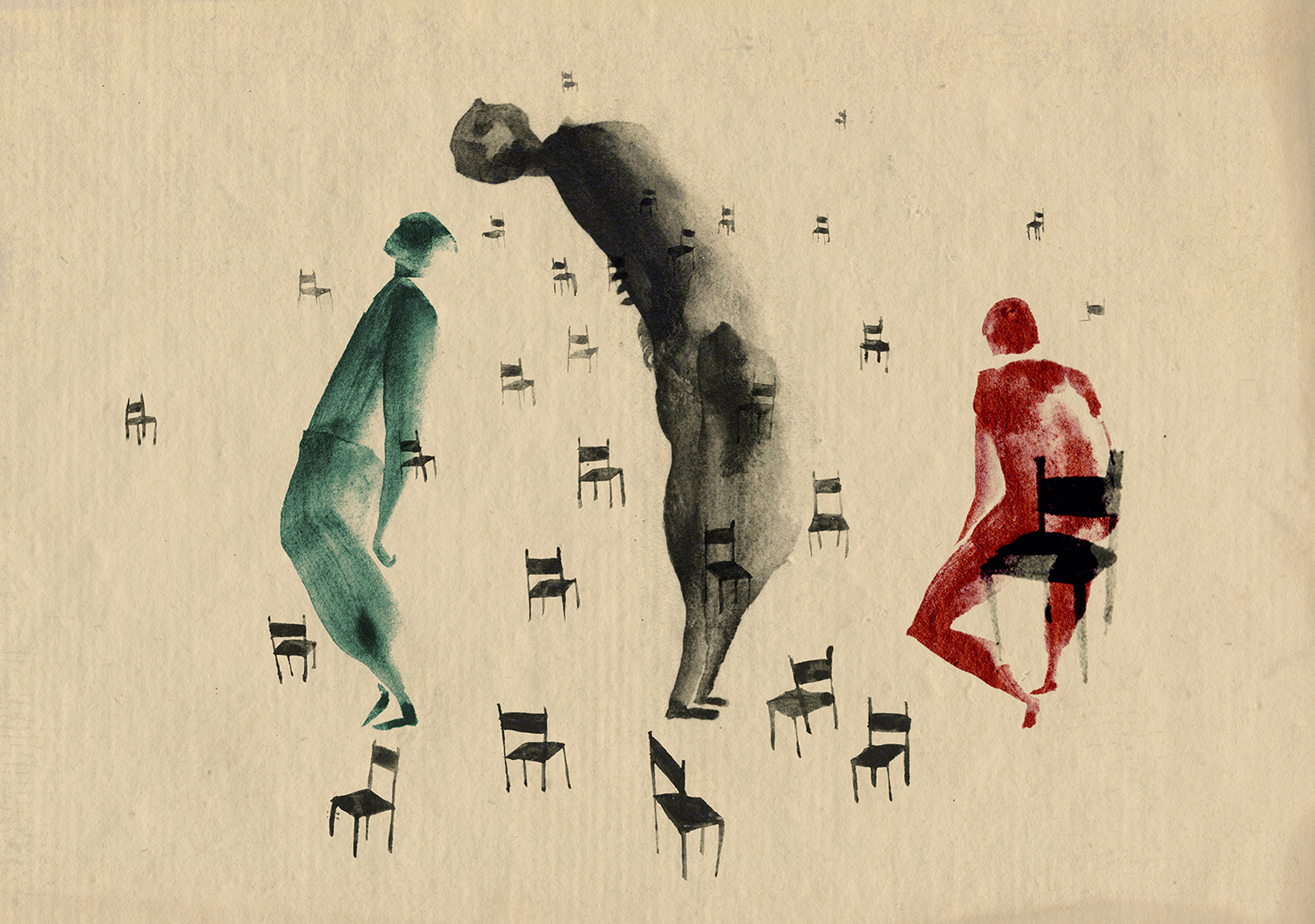
As evil buffoons tighten their grip on power and unleash ever more cruelty and violence, many of us are overwhelmed, exhausted, heartbroken, and don’t know where to focus. If we are not directly affected by violence, we might need to slow down.
While historians and writers have been warning us for decades about how violence that empires inflict on people far away, eventually makes its way home, when the empire cannibalises itself, this is no time for ‘we told you so.’ Instead, we should seek clarity.
This is not a time for heroes. Strong leaders are not coming to save us. The time for competing victimhood, identity or party politics is over. We are either for power or we are for life. Speaking truth to power is also futile. Power does not listen, they are too busy killing people and destroying the planet; and they are doing away with truth. This doesn’t mean we give up on truth, but it means we should aim our efforts elsewhere.
While our times call for organising for the long haul and mobilising when urgent actions are needed, in order that we may sustain our movements for the times ahead, in all their shapes and forms, we should develop a sort of revolutionary consciousness.
As we have written before, the most important work in resistance movements is the work done behind the scenes, and actions we take don’t have to be spectacular, but we have to develop the consciousness to not give up, to refuse; in the words of scholar and activist Amin Husain, we should think about being ungovernable as a strategy.
This is challenging as we face a constant deluge of information. Husain says many of us are afraid, we’re more isolated, more in debt, and they are more ruthless. Yet we have no choice but to resist. This mode of resistance is not about violence, it’s a refusal of allegiance to something that’s killing you, he explains. And once we understand that, space opens up and we can have a different conversation, one that is not about diagnosis, but about figuring out how we build power and sustain it over time.
And Palestine has been teaching us all along. Husain says that Palestine has given us a compass for what is right and what is wrong. It helps us to understand the interconnectedness of our struggles and figure out how to fight back. And this should bring us together.
But, he insists, “it’s not about what we do, it’s about how we think about what we’re doing.” For example, when he stopped paying his student loans and was told he was defaulting, in his mind, he was on strike.
“These modes of consciousness, of liberation consciousness, is something we cultivate over time, it’s how people in Palestine are able to survive until now. It’s not out of victimisation and victimhood, it’s about a recognition, they have a whole way of evaluating things differently. When we’re in movements, we feel that way. When we’re not together, we don’t.”
This is difficult for many people, especially in overly capitalistic societies where even personal relationships can become transactional and our activism competitive. Many people in the so-called West, who may have believed that NGOs were the drivers of social change, still have this idea that they can help liberate others. But you can’t liberate others until you have liberated yourself.
In Freedom is a Constant Struggle, Angela Davis says that progressive struggles are doomed to fail if they do not also attempt to develop a consciousness of the insidious promotion of capitalist individualism; this means we have to examine social relations and political contexts, but also our interior lives.
She points to the fact that corporations and megacorporations have grasped the ways in which what we often consider to be disparate issues are connected. They have even learned how to access aspects of our lives that cause us to express our innermost dreams in terms of capitalist commodities. This is work we should have done, she says.
“We will have to do something quite extraordinary: we cannot go on as usual. We cannot pivot the centre. We cannot be moderate. We will have to be willing to stand up and say no with our combined spirits, our collective intellects, and our many bodies.” The question for us, she says, is how to bring more people into our movements, how to create windows and doors for people to enter and join.
Inspired by the writings of Mahmood Darwish, writer Viet Thanh Nguyen says we have to practice expansive solidarity, as opposed to limited solidarity, which is defined narrowly, where we keep a small circle of inclusion. Expansive solidarity is where we find kinship with an unlikely other and an ever widening circle.
Memory from our own suffering may trap us and prevent us from seeing that we too, can harm others, Nguyen says. What saves us from that trap is expansive solidarity and capacious grief, or like the Vietnamese say when they encounter others who have experienced loss, Chia buồn, which is a sharing of sorrow. “Expansive solidarity, capacious grief and the sharing of sorrow,” he says, “all help us answer the question of who we should feel solidarity with. That answer is simple and yet difficult: whoever is the cockroach, whoever is the human animal, whoever is the other.“
Words, Veronica Yates and illustration, Miriam Sugranyes
“Decolonising the World / with Amin Husain.” The Chris Hedges Report, 22 January 2026. Watch/listen here.
Freedom is a Constant Struggle, Angela Davis.
Viet Thanh Nguyen at ‘Voices for Gaza,’ New York City Town Hall, 21 September 2025. Listen to his speech here. All speeches are available here.
‘Angela Davis: A Life of Activism,’ CIIS Public Programmes Podcast. Listen here.
The Wretched of the Earth, Frantz Fanon.
When Things Fall Apart, Heart advice for difficult times, Pema Chödrön.
Hold Everything Dear: Dispatches on Survival and Resistance, John Berger.
“The Freedom to Move: in conversation with Harsha Walia,” The Rights Studio Magazine, Vol 3 Movement. Read here.

“Imagination is more important than knowledge. Knowledge is limited. Imagination encircles the world.” — Albert Einstein

“Vocabulary is not genocidal. Annihilation is.” — Mohammed El Kurd

“Action without a name, a who attached to it, is meaningless.” — Hannah Arendt
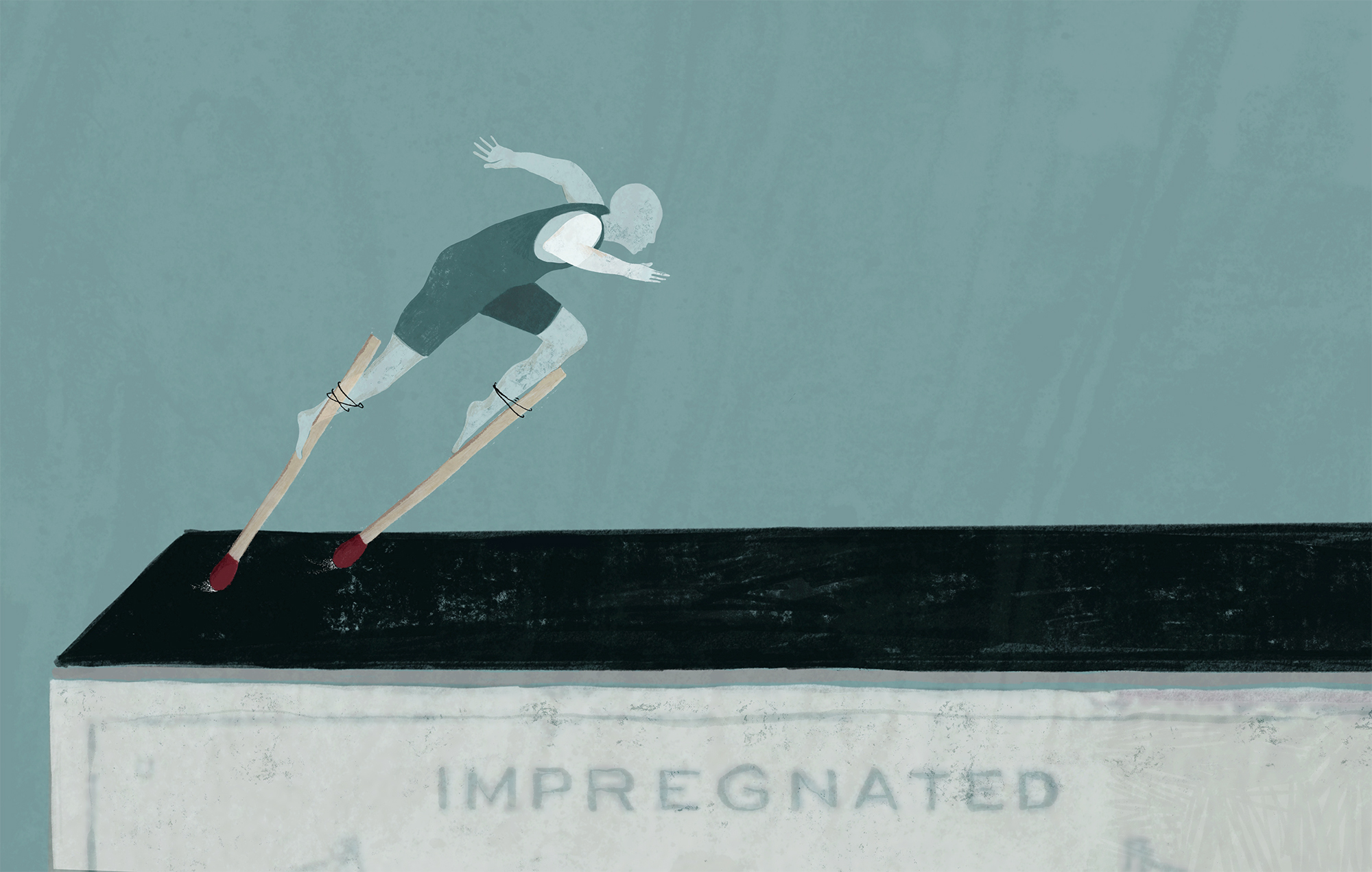
“A civilization that proves incapable of solving the problems it creates is a decadent society; A civilization that chooses to close its eyes to its most crucial problems is a sick civilization. A civilization that plays fast and loose with its principles is a dying civilization.” — Aimé Césaire


“Politically, the weakness of the argument has always been that those who choose the lesser evil forget very quickly that they chose evil. … Acceptance of the lesser evils is consciously used in conditioning the government officials as well as the population at large to the acceptance of evil as such.” — Hannah Arendt


