
By clicking “Accept All Cookies”, you agree to the storing of cookies on your device to enhance site navigation, analyze site usage, and assist in our marketing efforts. View our Privacy Policy for more information.
“Times are difficult globally; awakening is no longer a luxury or an ideal. It’s become critical. We don’t need to add more depression, more discouragement, or more anger to what’s already there. It’s becoming essential that we learn how to relate sanely with difficult times.” — Pema Chödrön


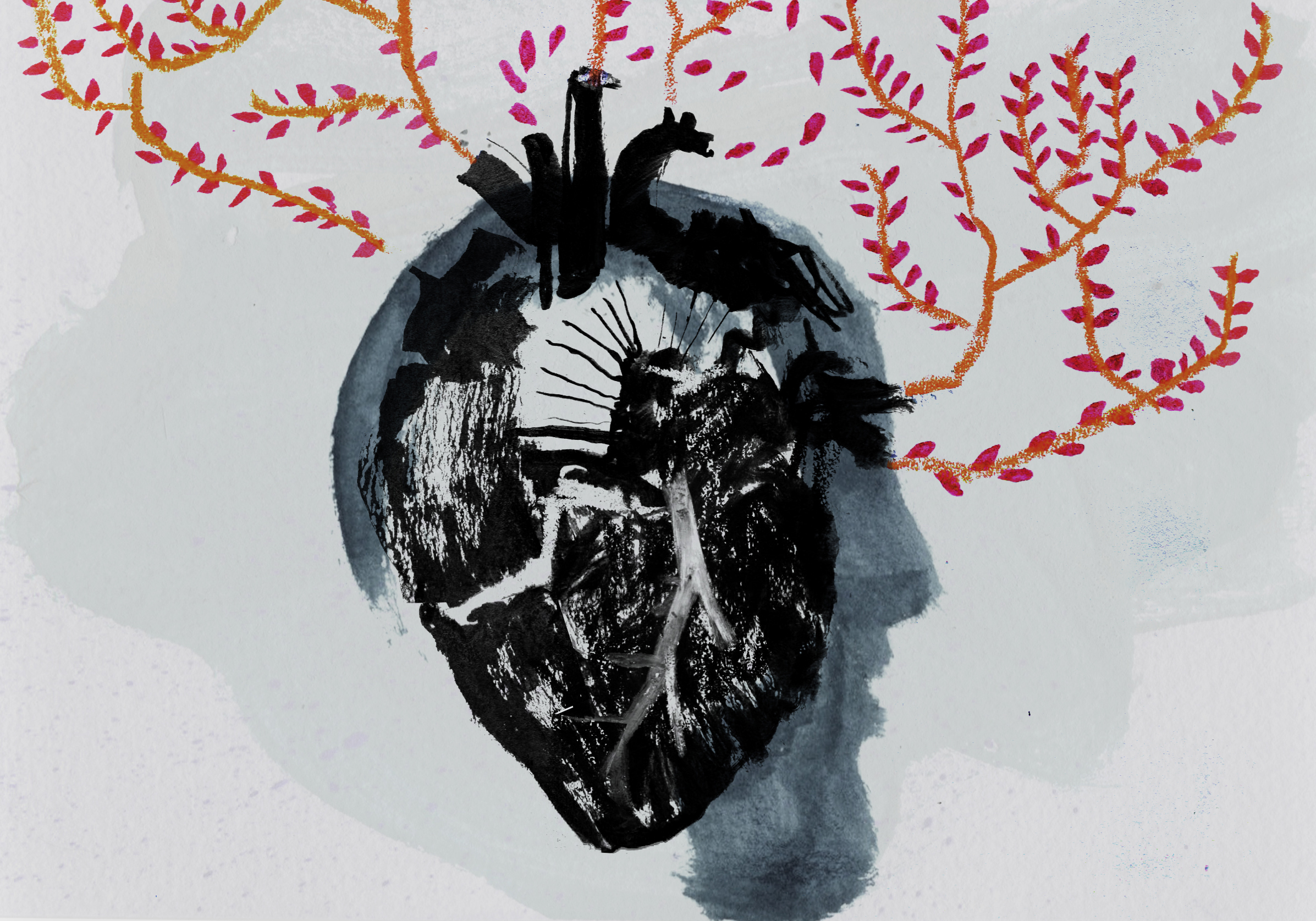
In our last post we asked whether watching the suffering of others made us spectators, while also acknowledging that staying with the images coming out of Gaza is not only to bear witness, but in the light of censorship and repression, a form of resistance. But, we should also be asking: what does it do to our souls to keep watching the worst cruelties being inflicted on other humans, month, after month, after month?
Psychologist Basmah Kahil says that many of us who have been witnessing what is happening in Gaza and beyond are likely suffering from vicarious trauma (also called secondary trauma).
While trauma is nothing new and has been part of the human condition for time immemorial, it wasn’t until the 1980s, that trauma, and in particular, post traumatic stress disorder (PTSD), became classified as a mental disorder as a consequence of having been exposed to an event considered traumatic, such as war, torture, or rape (rather than as a personal weakness of character which it had been until then).
The word trauma is thrown around a lot these days and may not always be fully understood or used appropriately, however there are different levels of trauma, and not everyone experiences trauma the same way.
And while there is of course a difference between experiencing an event and witnessing it, Khalil says, our minds can’t tell the difference because it goes off perception, this means we can develop trauma from watching things on our phones.
The amount of violence we have been watching is not normal, she insists; what would mostly affect professionals, like first responders, journalists, aid workers, every day citizens are now being exposed to and we don’t have access to the care needed.
Importantly, trauma is not just the events themselves, but what comes before, in this case, years of violence and dehumanisation, and what comes after, the silence, the enabling, the erasure, the gaslighting, the criminalisation, the repression. All of that influences our response to it.
This is leading to moral injury, Kahil explains, where “what we are seeing goes so against our moral values, our ethics, and our own code of conduct internally that we have lost trust on so many fronts, with so many people, and we feel so betrayed.”
Moral injury has been described as a crushing of the human soul. Author and psychiatrist Gabor Maté defines moral injury as watching something terrible happen and feeling helpless in the face of it. Despite all of our activism, he says, none of it has saved the life of a single Palestinian child, “it’s hard to hold all that outrage, all that despair, that desire and commitment to do something and that short-term ineffectiveness of anything that we do.”
But we have to take care of ourselves, he cautions, because trauma’s impact is that it closes our heart. This can lead to compassion fatigue. Being with this horror and surviving in the fullness of our humanity is very difficult, which is why a lot of people distance themselves from it.
“It's impossible to have our eyes open and not to have our hearts broken,” Maté says. And yet the only way to get out of this is to allow ourselves to be vulnerable (from Latin, means ‘to be capable of being wounded’). He says we have to feel our despair, to feel our pain, and our heartbrokenness, not to run away from it, and still remain active in the face of it, without bitterness, without hatred.
Many people feel guilty because they are safe, their lives are not being destroyed so they feel like they have to watch everything. And while guilt is a higher emotion, Khalil explains, it shows we have awareness, comparison keeps us stuck. So we have to take care of ourselves in order that we are able to be most efficient in our responses.
“People in Falasteen are going through a physical war,” she says, “and us on the other side of the planet are going through a psychological war. It’s a war tactic used to make us feel hopeless, to make us feel like what we are doing is never going to be enough.” We must not give in to that psychological warfare.
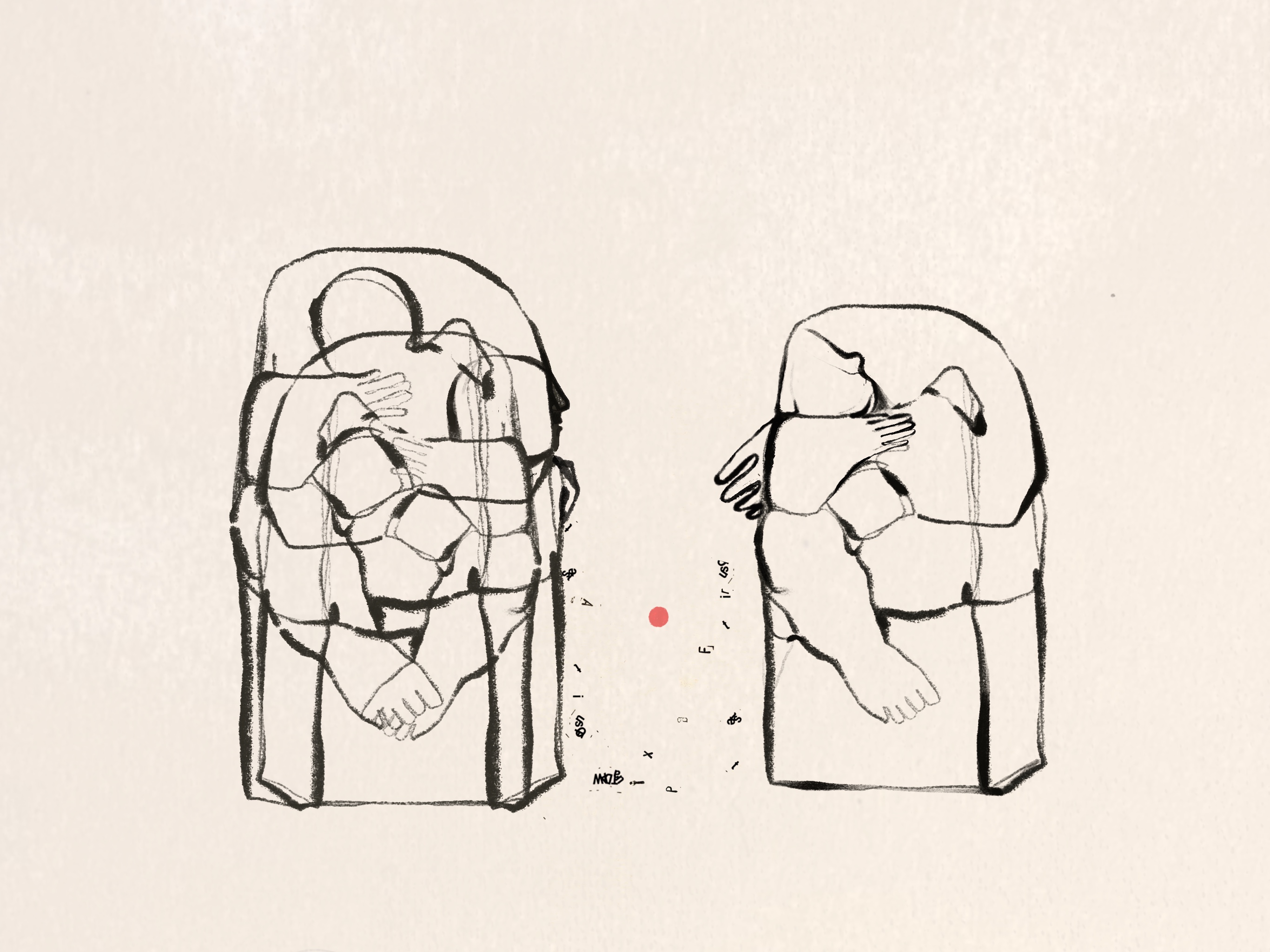
Maté’s advice is to find others and not be alone with it. But we should also not let it consume us, this does not mean to not be active, but we have to come from a place of groundedness, because If we don’t, we’ll be of no use to anyone and it will impair the impact of our activity.
While “in the short term, we’re gonna lose, because they have the power and we don’t, and their power is —not quite— but almost infinite,” Maté insists, “in the long term, the very rabidity of their assault on truth tellers tells their desperation.”
“The very fact that in the face of all the propaganda and all the withholding of truth, so many people’s hearts are broken, that’s a sign, that’s a tribute to humanity.” And we have a larger goal, he continues, which is to contribute to the light and the truth in the world as best we see it, “it’s a long term calling, and all of us can contribute to it.”
While it might feel like we have failed, he says, we should not believe that for a second. We mustn’t take it personally, this is a long term struggle and the task is not ours to finish.
Words, Veronica Yates and illustration, Miriam Sugranyes
See also: Bearing the World / Narrative Warfare / The Cult of the Hero
________________
References
When Things Fall Apart, Pema Chödrön.
PTSD History and Overview, Matthew J. Friedman, US Department of Veteran Affairs. Read here.
‘Israel, Gaza, and the Empire of Lies: Dr. Gabor Maté on Truth and Trauma: How to remain human in these dystopian times.’ Out Loud with Ahmed Eldin, 26 Jul 2025. View here.
‘The Moral Injuries of Witnessing Genocide in Gaza,’ Michael Schwalbe, Common Dreams. 31 December 2023. Read here.
‘The trauma of bearing witness to Gaza, With Basmah Kahil.’ Jan Fran Has Issues Podcast, 10 May 2025. Listen here.
‘Enduring the Trauma of Genocide (w/ Gabor Maté).’ The Chris Hedges Report, 13 December 2024. View here.
The Body Keeps the Score - Mind, Brain and Body in the Transformation of Trauma. Bessel Van Der Kolk.
‘Healing Moral Injury,’ CREA Counseling Ireland. Read here.
Further Resources
One Day, Everyone Will Have Always Been Against This, Omar El Akkad.
Regarding the Pain of Others, Susan Sontag.
Trauma Stewardship: An Everyday Guide to Caring for Self While Caring for Others, by Laura van Dernoot Lipsky and Connie Burk.
Restoring Sanity, Practices to Awaken Generosity, Creativity and Kindness, Margaret Wheatley.
‘An introduction to moral injury - Dean Yates,’ Worksafe Tasmania, 3 Nov 2025, Watch here.
‘On The Disembodiment of “Bearing Witness” To Injustice In West Asia (fka The Middle East),’ Tania S. Shoukair, The Deep Knowing, 19 April 2026. Read here.

“Language is never sufficient. There is not enough of it to make a true mirror of living. The soothing or afflictive effect of stories we tell is not in whether we select the right words, but in our proximity to what the right words might be. This is not some abstraction, but a very real expression of power — the privilege of describing a thing vaguely, incompletely, dishonestly, is inseparable from the privilege of looking away.” — Omar El Akkad

“I have seen that it is not man that is impotent in the struggles against evil, but the power of evil that is impotent in the struggle against man. The powerlessness of kindness, of senseless kindness, is the secret of its immortality.… Human history is not man’s battle to overcome evil. It is a battle fought by a great evil struggling to crush a small kernel of human kindness. But if what is human in human beings has not been destroyed even now, then evil will never conquer.” — Vasily Grossman

"We have art in order not to die from the truth." — Friedrich Nietzsche

“You can cut all the flowers but you cannot keep spring from coming.” — Pablo Neruda

“[People] fall into a cult of big hero/rockstar worship and don’t appreciate the efforts of small local ‘invisible’ everyday heroes and their small acts.” — Manish Jain


