
By clicking “Accept All Cookies”, you agree to the storing of cookies on your device to enhance site navigation, analyze site usage, and assist in our marketing efforts. View our Privacy Policy for more information.
"A tree has roots in the soil yet reaches to the sky. It tells us that in order to aspire we need to be grounded and that no matter how high we go it is from our roots that we draw sustenance." — Wangari Maathai


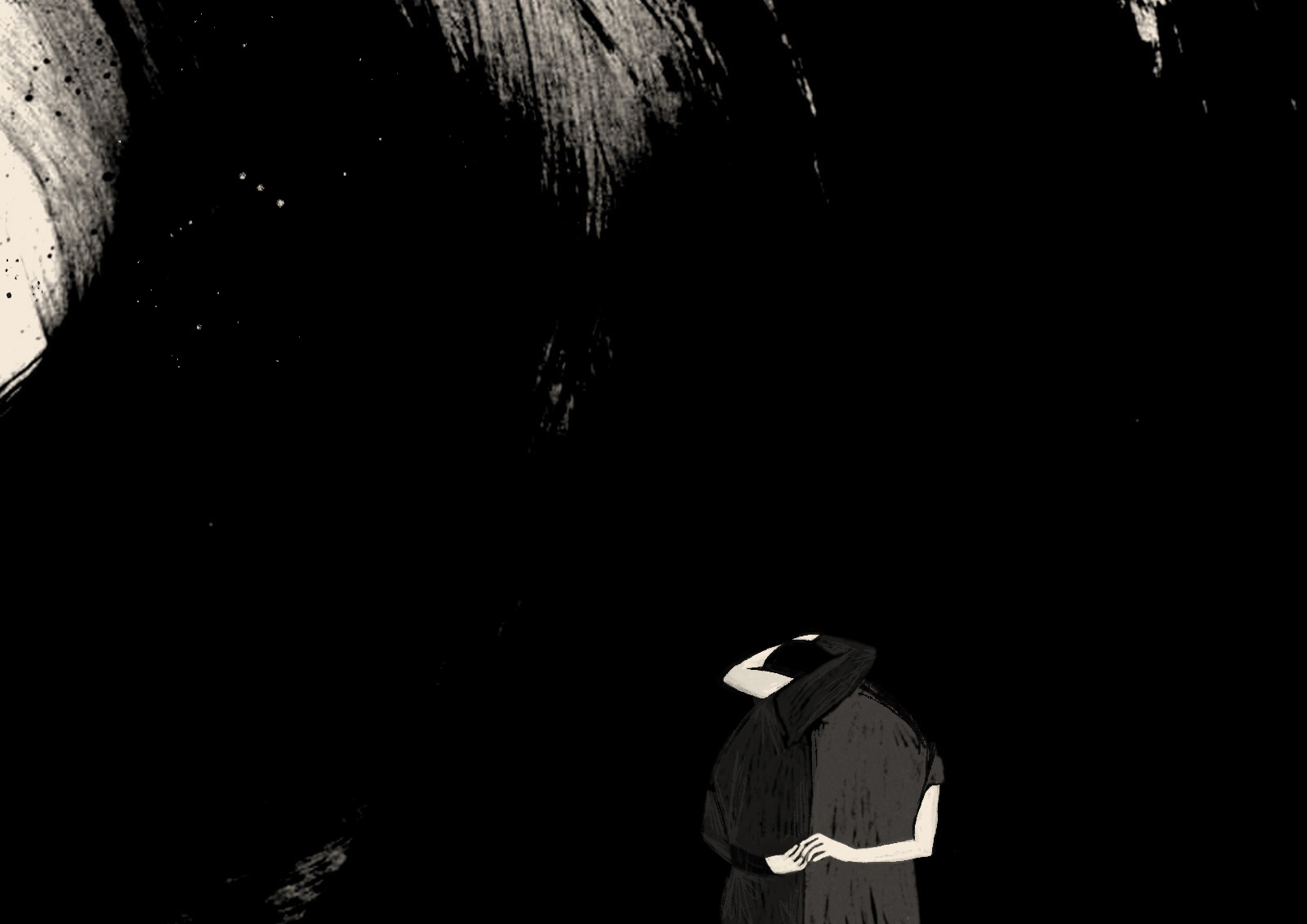
We are living in an overly public and performative world, one where the idea of transparency taken to its extreme becomes what we previously referred to as the tyranny of visibility. Everything and everyone has to have an audience, a message, a profile.
While there is nothing intrinsically wrong with performance, visibility makes us more vulnerable to surveillance, doxxing, harassment and attacks. And in these urgent times, when we desperately need collective action, if everyone is performing, who is doing the work? Does performance lead to deeper engagement?
A world that over-emphasises sight to the detriment of other senses, ocularcentrism, as Emma Dabiri writes, which is particularly prevalent in western culture, leads not only to shallowness of beauty regime, but it also contributes to over emphasis given to visual racialised characteristics such as skin colour, facial features and hair texture.
A shallow society is one that worships fame, celebrities, and heroes, and in turn, blames all ills on individuals, on the other. This turns all politics and human struggles into battles between personalities, it is no longer about ideas, but emptiness, it just becomes about crushing our opponents (and preferably looking good while doing it).
Even our politicians and those of us within social justice spaces remain stuck on superficial actions. Our witnessing of horrors becomes spectacle, our reactions mostly performative: we repost, we comment, we issue strongly worded statements. And since It appears as though something is being done, the silent majority remains on the sidelines.
This society of performativity lacks an inner core, lacks depth. Without this inner core, without roots, without groundedness, we are also more likely to be fooled, seduced or distracted by superficial things, superficial people, superficial politicians with superficial slogans. One soundbite after the next.
While we often hear about seasonal light deficiency (in countries in the north at least), an excess of light is also damaging, both physically and metaphorically; it’s leading to what scholar and practitioner Andrew Holecek, calls a darkness deficit disorder.
Darkness deficit disorder is a deficit of what darkness represents, he says, it’s a disorder of depth, a disorder of authenticity, intimacy, connectivity and even simplicity. This leads immediately to a loss of empathy, compassion and basic goodness.
On a physical level, there is light pollution which has been increasing year on year and is having a deleterious impact on the ecosystem which is unable to adapt. And each of us hold a light in the palm of our hands, these weapons of mass distraction, Holecek says.
Light makes us look outwards, when we should be looking inwards. When we look inwards, we cease, we negate, we stop, we dis-cover. In wisdom traditions, for example, many terms relating to liberation are terms of cessation, of negation, of not doing.
Light pulls us out and away from ourselves. We have to “stop all the dismemberment, stop all the fracturing, the dis-tracting (the etymology means ‘pulling apart') stop pulling apart, from yourself, from each other, from the planet… darkness is a return to wholeness. Darkness reveals who we actually are. It’s about being, not doing,” Holecek insists.
So we should literally spend time in complete darkness. There, Holecek says, the past closes in on you, the future closes in on you, you are forced into the present moment, and this extraordinary constriction actually flips into incredible openness. This is a way to reset, to re-balance.
We can understand this concept – and our current times – through concepts like yin and yang in Taoism, or in a western framework, Enantiodromia (from Greek, means “opposite” and “running”), these phenomena essentially explain how when something is taken to its extreme, it inevitably transforms into its opposite.
This can be applied or observed in nature, in geopolitics, in the mind. Night transforms into day. Oppression engenders resistance. Revolutions are met with counter-revolutions. An empire is at its most violent before it collapses. Polarisation leads to new calls for belonging. Wellness culture can lead to burnout. Love transforms into hate. And so on.
How might this apply to our work?
When our movements face their most extreme opposition, they probably also contain seeds of their own reversal. This does not mean we disengage, it means we learn to recognise when to apply pressure, when to try new tactics, when to build alternative structures. It also means we develop enough self awareness that we ourselves don’t get swayed into authoritarian behaviours.
If raising awareness no longer changes anything, if visible and symbolic actions are met with increased oppression, perhaps we must go dark, unseen, underground, continue our actions, but not get caught.
Words, Veronica Yates and illustration, Miriam Sugranyes
References
The Transparency Society, Byung-Chun Han.
Disobedient Bodies, Emma Dabiri.
‘Darkness Deficit Disorder: How Constant Stimulation Has Shaped our Consumption.’ The Great Simplification Podcast, Ep 221, with Andrew Holecek. 27 May 2026. Listen here.
‘Enantiodromia,’ Atmos, by willow defebaugh, 2 July 2020. Read here.
Jung on the Enantiodromia: Part 1–Definitions and Examples.’ The Jungian Centre. Read here.
Further Resources
How to Blow up a Pipeline, Andreas Malm.
‘You can’t post yourself out of fascism.’ Janus Rose, 404 Media, 5 February 2025. Read here.
The AI Resist List, https://airesistlist.org/
‘Moving From Harmful to Liberatory Funding Practices with Palestine as Your Compass’ and ‘How Philanthropy Can Divest from Genocide in Palestine and Beyond.’
Funders for Palestine. Visit: https://www.raisethebarphilanthropy.org/
‘At its darkest hour, is internationalism back?’ Global Nation, Anna Hope and Hassan Damluji. May 2026. Read here.
‘Wellbeing for Activists Padlet,’ RefugEAP Network. View and contribute here.
‘Towards meaningful action – NGOs & far right authoritarianism.’ thinking, doing, changing, 18 May 2026. Read here.

“I have met with but one or two persons in the course of my life who understood the art of Walking.” — Henry David Thoreau

“The human interactions with trees and the forest are deeply embedded in our collective unconscious and cultural narratives, providing many of the fundamentals of our belief systems, folklore and endlessly inspiring literature and art.” — John Tebbs

“The vicarious responsibility for things we have not done, this taking upon ourselves the consequences for things we are entirely innocent of, is the price we pay for the fact that we live our lives not by ourselves but among our fellow men, and that the faculty of action, which, after all, is the political faculty par excellence, can be actualized only as one of the many and manifold forces of human community.” — Hannah Arendt
“It's not the notes you play; it's the notes you don't play.” — Miles Davis

“Knowing that life is short and the task great, I let things go and I choose my work over polemics.”— Auguste Rodin


